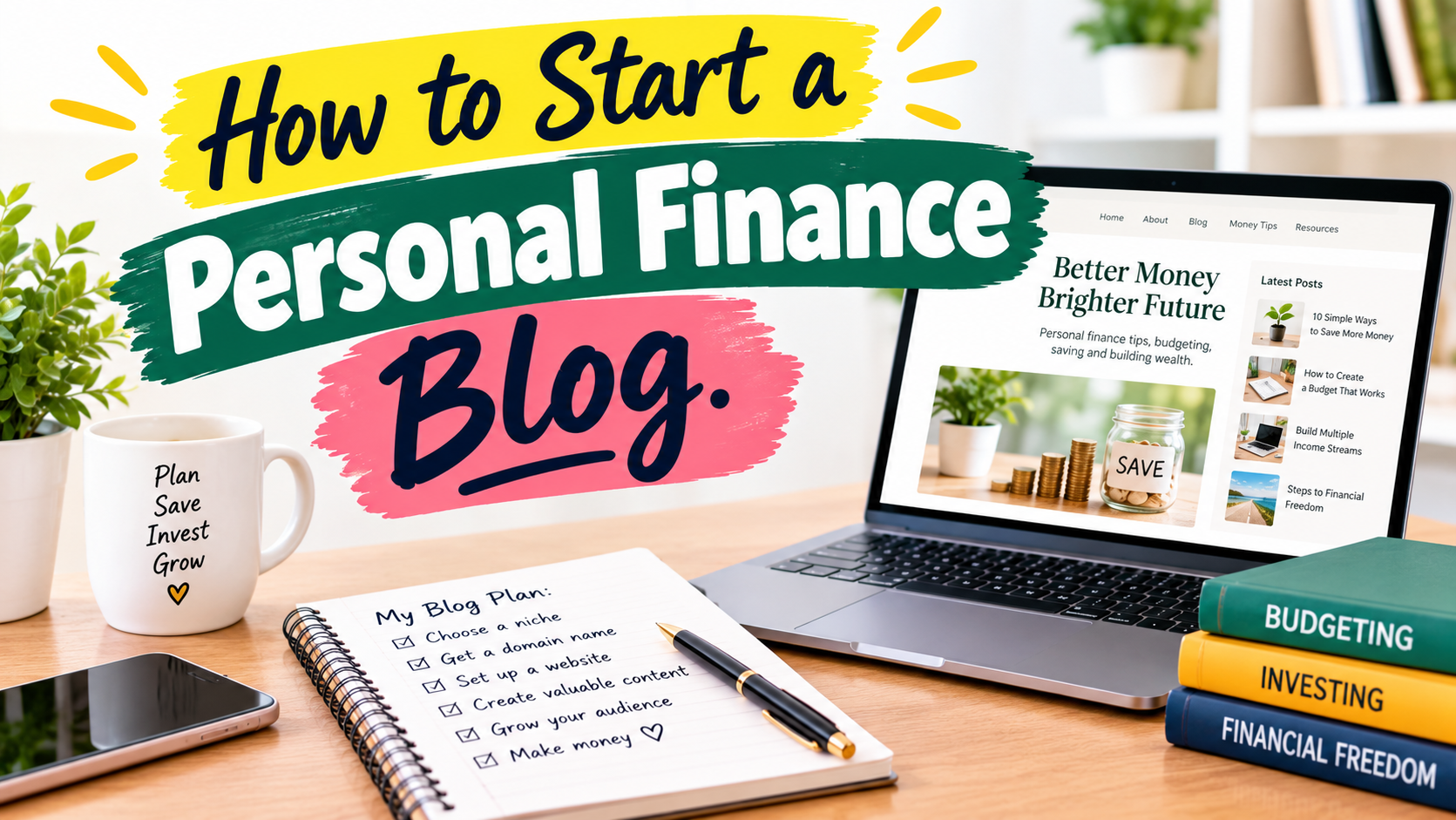
Have you ever thought about starting a blog that helps people manage their money while also creating an income stream for yourself?
A personal finance blog can be a great place to start. You can write about budgeting, saving money, managing credit cards, paying off debt, and other financial topics that people want to understand better.
The best part is that you don't need to launch a huge website with hundreds of articles on day one. You can start with a clear topic, a simple website, and useful content that answers real questions.
In this guide, I'll walk you through how to start a personal finance blog, choose your niche, set up your website with WordPress, create your first articles, attract readers, and explore different ways to monetize your work.
Let's get started.
Why Start a Personal Finance Blog?
Personal finance is a broad topic that affects people's everyday lives. From figuring out how to create a budget to understanding credit cards or saving for a first home, there are plenty of subjects you can cover.
Starting a finance blog gives you an opportunity to share what you know, help readers make more informed decisions, and gradually build an online business.
There are several potential benefits.
First, you can build an audience around a subject you enjoy. As your content becomes more useful, readers may return to your website for additional information.
Second, you can explore different income streams. Depending on your audience, experience, and the quality of your website, these might include affiliate marketing, advertising, digital products, sponsored content, or services.
Finally, a blog can help you build professional connections. You may eventually collaborate with other creators, interview financial professionals, or develop a newsletter and community around your content.
However, a finance blog is not a guaranteed source of income. It takes time to establish credibility, attract consistent traffic, and discover which monetization methods work for your audience.
Step 1: Choose a Specific Personal Finance Niche
Before buying a domain name or writing your first article, decide what your blog will focus on.
Personal finance is a large subject. Trying to cover everything immediately can make your website feel unfocused and make it harder to understand who your intended readers are.
Instead, choose one main niche and build your content around it.
Here are some ideas to consider.
Budgeting and saving money
You could teach readers how to create a monthly budget, track expenses, reduce unnecessary spending, and save toward specific goals.
Possible article ideas include:
- How to Create a Budget for Beginners
- Simple Ways to Save Money Every Month
- How to Build an Emergency Fund
- Budgeting Tips for Families
Personal finance for young adults
Young adults often have questions about managing their first paycheck, building savings, handling debt, and preparing for major financial decisions.
You could create beginner-friendly guides that explain these topics in straightforward language.
Finance for entrepreneurs
If you are interested in business, you could focus on helping entrepreneurs understand cash flow, separate personal and business finances, prepare budgets, and plan business expenses.
Credit cards and credit management
This niche could cover responsible credit card use, understanding interest rates, managing balances, and comparing card features.
If you discuss credit scores or financial products, make sure your explanations are accurate and relevant to the countries you serve.
Investing and sustainable finance
You could publish educational articles explaining investing concepts, risk, diversification, and responsible investing approaches.
Because investment content can influence important financial decisions, research your claims carefully and avoid presenting uncertain returns as guaranteed.
My recommendation: Start with a niche you understand and can write about consistently. You can expand into related topics once your blog has a clear identity.
Step 2: Understand What You Need to Build a Website
Before setting up your blog, it helps to understand the three basic components of a website.
A domain name is your website's address, such as yourfinanceblog.com.
Web hosting is the service that stores your website's files and makes them accessible online.
A website platform allows you to create, edit, and manage your website and its content.
For this tutorial, we'll use WordPress as the blogging platform and Bluehost as the hosting provider discussed in the podcast.
You can explore the official websites here:
WordPress is popular among bloggers because it offers flexible design options, a large selection of themes and plugins, and tools for managing articles and website pages.
Bluehost is one hosting option, but it isn't the only one. Compare current pricing, renewal rates, support, performance, and included features before choosing a provider. Domain registration and hosting offers can change, so check the latest terms before purchasing.
Step 3: Choose a Domain Name for Your Finance Blog
Your domain name is part of your brand, so choose something that is easy to remember and relevant to your content.
For example, if your blog focuses on budgeting, you might choose a name that suggests saving, planning, or managing money.
Keep these tips in mind:
- Make it simple: Choose a name that is easy to spell and pronounce.
- Keep it memorable: Avoid unnecessarily long names and complicated combinations of words.
- Reflect your topic: Your name should make sense for your intended audience.
- Check availability: Make sure the domain is available before committing to your branding.
- Avoid trademark conflicts: Research existing brands and trademarks before using a name.
A .com domain is familiar to many internet users, but it isn't your only option. Choose an appropriate extension that fits your brand and budget.
You don't need the perfect name before you start. You need a professional, usable name that you can build around.
Step 4: Set Up Your Hosting and Install WordPress
Once you've selected a domain name, it's time to get your website online.
If you're following the approach demonstrated in the podcast, visit Bluehost and review the available hosting plans.
The general process is straightforward:
- Choose a hosting plan that fits your needs and budget.
- Register a new domain or connect a domain you already own.
- Create your hosting account.
- Follow the provider's instructions to install or configure WordPress.
- Open your WordPress dashboard and check that your website is working.
Some hosting plans include guided WordPress installation or AI-assisted website creation. These features can help you get started more quickly, although you should still review and customize the website yourself.
Don't feel pressured to purchase the most expensive plan immediately. Start with what your website actually needs and upgrade when your traffic or technical requirements justify it.
Step 5: Design Your Blog and Choose a Theme
Once WordPress is installed, you can begin customizing your website.
Your design doesn't have to be complicated. A clean layout, readable text, clear navigation, and useful categories are more important than adding lots of decorative elements.
You can begin with a free WordPress theme and upgrade later if you need additional features.
Some themes mentioned in the podcast include:
Compare their current features, performance, customization options, and pricing before choosing one.
For a finance blog, consider a professional color palette, readable fonts, and a consistent style for article images and headings.
You can use Canva to create a simple logo and branded graphics.
Most importantly, make sure your website works well on mobile devices. Many readers will visit from their phones, so your articles should be easy to read without excessive scrolling, pop-ups, or distracting design elements.
Step 6: Create the Essential Pages
Before publishing a large number of articles, create the main pages that help visitors understand your website.
Homepage
Your homepage should explain what your blog covers and direct readers to your most useful content.
For example, you could feature sections for budgeting, saving money, credit management, and beginner investing.
About page
Introduce yourself, explain why you created the blog, and describe what readers can expect.
If you have relevant professional qualifications or experience, include them accurately. Never imply that you have credentials you do not possess.
Contact page
Give readers, potential partners, and other professionals a way to contact you. You can use a contact form or a dedicated business email address.
Privacy policy and terms
Your privacy policy should explain how your website handles personal information, cookies, analytics, email subscriptions, and other relevant data practices.
Terms of use can explain the conditions under which visitors use your website.
You may also need affiliate disclosures and other notices, depending on your monetization methods and audience. Use accurate information that reflects your actual website practices rather than copying generic legal text without reviewing it.
Step 7: Research Keywords and Start Publishing Articles
Now comes one of the most important parts of building your blog: creating useful content.
Your goal is not simply to publish as many articles as possible. You want to answer questions that your target audience is already asking.
Start with keyword research.
A keyword is a word or phrase someone enters into a search engine. For a budgeting blog, examples might include “how to create a monthly budget” or “budgeting tips for beginners.”
The podcast mentions Semrush as a keyword research tool. You can explore its current features and pricing, or begin with search suggestions and other available keyword research resources.
Look for topics that are relevant to your niche and match what searchers want to learn. Consider the competition, the quality of existing results, and whether you can provide a more helpful explanation.
Create a simple content plan
If your blog focuses on budgeting, your first group of articles might include:
- How to Create a Budget for Beginners
- How to Track Monthly Expenses
- Practical Ways to Save Money
- How to Build an Emergency Fund
- Common Budgeting Mistakes to Avoid
These articles can connect to one another through internal links, helping readers discover related information.
Before writing, decide what each article should help the reader accomplish. Create an outline, organize the information into clear sections, and explain financial terms in plain language.
Use examples where they make the explanation easier to understand. If you include statistics, tax rules, interest rates, or financial product details, verify them using reliable sources and provide links to those sources.
You can start publishing through the WordPress dashboard by opening Posts and selecting Add New Post.
Step 8: Build Trust With Accurate Finance Content
Personal finance content deserves particular care because readers may use it when making important decisions about their money.
A successful finance blog needs more than attractive design and keyword optimization. It needs trustworthy information.
Here are some practical ways to improve your content:
- Include an accurate author biography.
- Explain the experience or qualifications relevant to the topic.
- Link to reliable sources when making factual or statistical claims.
- Update articles when important information changes.
- Explain risks and limitations, not just potential benefits.
- Clearly distinguish educational information from individualized financial advice.
- Disclose relevant affiliate relationships and sponsorships.
For example, if you write about credit cards, explain fees, interest, eligibility, and repayment responsibilities rather than focusing only on rewards.
If you write about investing, discuss risk and avoid promising that readers will make a particular return.
You can review Google's guidance on creating helpful, reliable, people-first content to understand the principles behind useful search content.
Your goal should be to help readers understand their options, not to push them toward a financial product simply because it offers a commission.
Step 9: Promote Your Finance Blog and Attract Readers
Publishing a good article is only the beginning. You also need to help people discover it.
Use Pinterest
Pinterest can be useful for visual content such as budgeting tips, savings challenges, financial checklists, and printable planners.
Create a clear graphic for each article and link it to the relevant page on your website. Use descriptive titles and relevant keywords without making misleading promises.
Share content on LinkedIn
LinkedIn may be suitable if your content focuses on professional finance, entrepreneurship, business budgeting, or financial education.
Share useful takeaways from your articles and participate in relevant conversations instead of posting promotional links without context.
Build an email list
An email newsletter gives readers a way to receive your latest articles and resources.
You could offer a simple budgeting worksheet or expense tracker as a free resource in exchange for an optional email subscription. Make the sign-up process clear and explain how subscribers' information will be used.
Collaborate with other creators
Consider interviews, guest articles, expert Q&As, and joint webinars with relevant bloggers or qualified professionals.
Collaborations can introduce your content to new audiences while helping you learn from others in your niche.
Keep improving your search visibility
Search engine traffic may take time to develop. Publish helpful articles consistently, use clear headings, connect related posts with internal links, and make sure your website loads and works properly.
There is no guaranteed timeline for ranking in search results. Focus on improving the quality of your content and understanding what your audience needs.
Step 10: Monetize Your Personal Finance Blog
Once your blog has useful content and begins attracting readers, you can explore different monetization methods.
You do not need to use every method at once. Choose options that fit your audience, your experience, and the trust you've established.
Affiliate marketing
Affiliate marketing involves recommending products or services through special tracking links.
Depending on your niche, you might investigate relevant budgeting tools, financial education resources, software, or other products. Approval is not guaranteed, and each program has its own rules.
Only recommend products you have researched and can describe honestly. Disclose affiliate relationships clearly and check the regulations that apply to your audience.
Display advertising
You can investigate advertising services such as Google AdSense.
If approved, your website may earn revenue from eligible ad activity. The amount depends on traffic, audience characteristics, advertiser demand, and other factors.
Avoid filling your pages with so many ads that readers struggle to use your website.
Sponsored content
Some companies pay publishers to create sponsored articles or other content. Only consider sponsorships that are relevant to your audience and consistent with your editorial standards.
Make sponsored relationships clear to readers and never allow a sponsor to dictate misleading financial claims.
Digital products
You could create resources that help readers put your educational content into practice, such as:
- Budget spreadsheets
- Expense tracking templates
- Savings goal planners
- Personal finance ebooks
- Educational courses
Make sure your products are genuinely useful and describe exactly what buyers will receive.
Consulting or coaching services
If you have the appropriate expertise, you might offer educational sessions, workshops, or other services within your competence.
Be careful about the distinction between general financial education and regulated financial advice. Check the professional and legal requirements that apply before offering personalized services.
Final Thoughts
Starting a personal finance blog is a project you can approach one step at a time.
Choose a specific niche, register a suitable domain, set up WordPress, create a clean design, and publish helpful articles that answer real questions. Then promote your content, learn from your visitors, and explore monetization methods that fit your audience.
You don't need to launch with dozens of categories or a perfect website. Start with a clear purpose and a small collection of genuinely useful articles.
Remember that building a profitable blog takes time, and earnings are never guaranteed. In the finance niche, accuracy and trust are especially important because readers may use your content to make decisions that affect their financial lives.
Start by helping one specific audience solve one specific problem. Build from there, keep learning, and improve your blog as you grow.



0 Comments
Leave a comment