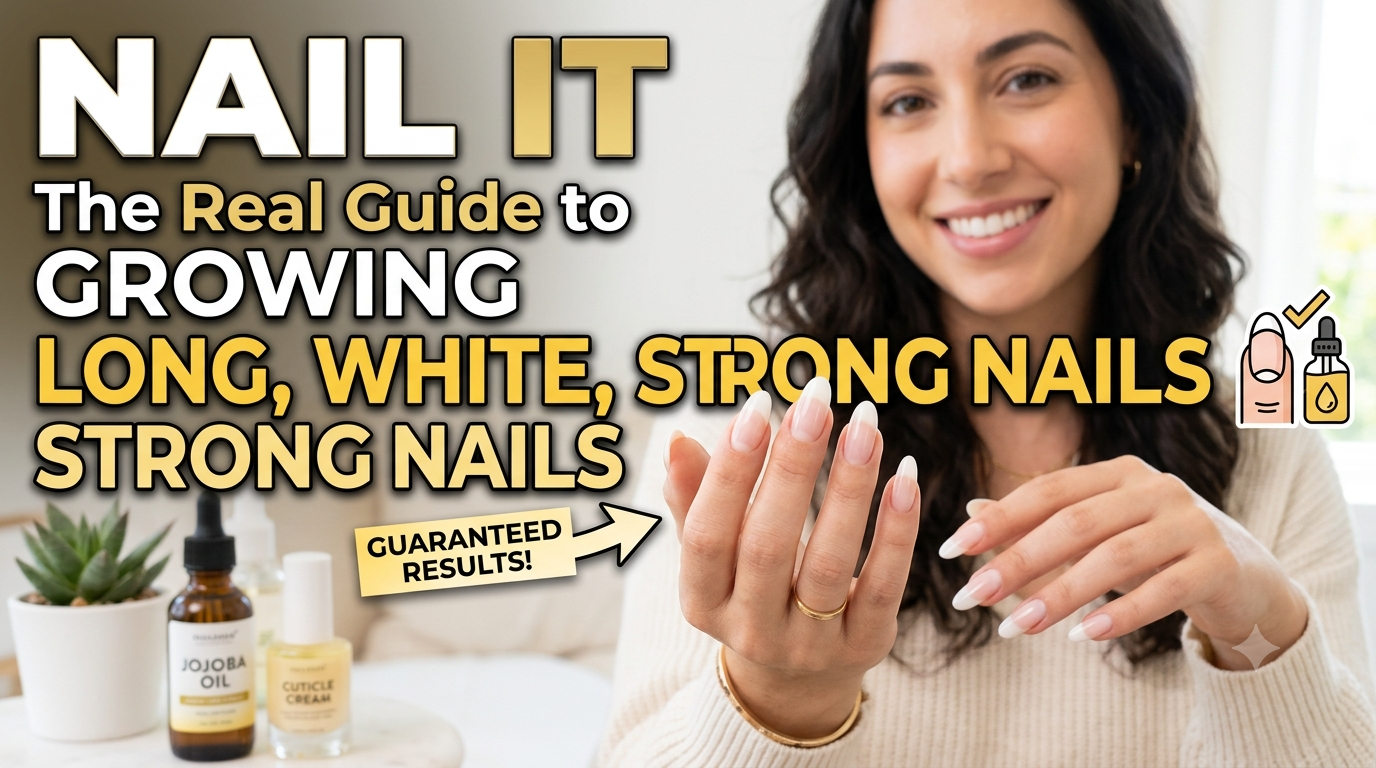
Strong, long nails with clean white tips look effortless in photos, but almost nobody gets there by accident. Behind every set of healthy natural nails is a mix of consistent habits, a little patience, and avoiding the everyday things that quietly damage nails without people realizing it. The good news is that unlike hair, nails grow relatively fast and respond quickly to better care — most people can see a real difference within a few weeks of doing the right things consistently.
This guide breaks down what actually works, based on how nails grow and what damages them, instead of vague "just take biotin" advice.
Understand What You're Actually Working With
Nails are made of layers of a protein called keratin, growing from the nail matrix under your cuticle. A few basics explain almost everything about nail care:
- Nails grow slowly — on average about 3mm a month for fingernails, so real length takes real time, not a single treatment
- Damage happens at the layers, which is why peeling, splitting, and brittleness usually start at the free edge (the white tip) and work backward
- Moisture balance matters more than most people think — nails that are too dry become brittle, but nails that are constantly wet (and then dried) also weaken, because they expand and contract repeatedly
- The white tips are simply the part of the nail that has grown past the nail bed — they're naturally more fragile than the pink, bed-supported part, which is why length and strength have to be built together, not separately
Once you understand this, most nail advice makes a lot more sense — you're not chasing one trick, you're managing growth, moisture, and protection all at once.
Step 1: Protect Your Nails From Daily Damage First
Before adding any products or routines, stop the habits that undo progress. This step alone makes a bigger difference than most people expect.
- Wear gloves for dishwashing and cleaning — repeated exposure to water and harsh detergents is one of the biggest causes of brittle, peeling nails
- Stop using your nails as tools — opening cans, scraping labels, or prying things apart puts direct stress exactly where nails are weakest
- Avoid picking at polish or gel — peeling off polish takes layers of the nail with it, which is often the real cause of thin, weak nails, not a lack of nutrients
- Be mindful with acetone-based removers — they're effective but drying with frequent use; non-acetone removers are gentler for regular use
- Limit prolonged water exposure — long baths, extensive hand-washing, or swimming without protection all contribute to the swelling-and-shrinking cycle that weakens nails over time
This step is unglamorous, but skipping it means every other step in this guide is working against constant damage instead of building on stable ground.
Step 2: Build a Simple, Consistent Moisture Routine
Dry, brittle nails split and peel before they ever get the chance to grow long. Moisture — both in the nail plate and the surrounding skin — is foundational.
- Apply cuticle oil daily, ideally at night — jojoba oil, vitamin E oil, or a dedicated cuticle oil all work well; the goal is consistency, not a specific brand
- Moisturize your hands regularly, not just your nails — healthy cuticles support healthy nail growth, and dry, cracked skin around the nail bed can affect the nail itself
- Massage oil or cream into the nail and surrounding skin, not just on top — a few seconds of gentle massage improves absorption and encourages blood flow to the area, which supports growth
- Avoid over-trimming or cutting cuticles aggressively — cuticles act as a seal protecting the nail matrix; cutting them too often can lead to infection risk and weaker nail growth over time
A one-minute cuticle oil habit before bed is one of the highest-return, lowest-effort changes you can make.
Step 3: Support Growth From the Inside
Nails do reflect overall health to some degree, though supplements alone won't fix damage caused by daily habits. A few things genuinely help:
- Get enough protein — since nails are made of keratin, a protein-rich diet supports the raw material your body uses to build them
- Biotin supplements have reasonable evidence for improving nail thickness and reducing brittleness in people with a deficiency, though results vary and consistency over several months matters more than the specific dose
- Stay hydrated — dehydration affects nails the same way it affects skin, contributing to dryness and brittleness
- Iron and zinc levels matter — deficiencies in either can show up as weak or ridged nails; if nails stay problematic despite good external care, it's worth mentioning to a doctor rather than guessing at supplements
- Be patient with internal changes — nails grow slowly, so nutritional improvements typically take 2–3 months to become visible at the nail plate, not days or weeks
Supplements support growth, but they can't outrun daily damage — steps 1 and 2 still matter even if you're taking every vitamin available.
Step 4: Strengthen the Nail Itself
Once damage is minimized and moisture is consistent, targeted strengthening products can help reinforce the nail structure.
- Use a nail hardener or strengthening base coat, especially during the early growth phase when nails are most vulnerable to breaking
- Look for formulas with keratin, calcium, or nylon fibers, which are commonly used to add flexibility and resilience rather than just hardness — overly hard formulas can sometimes make nails more brittle and prone to snapping rather than bending
- Alternate strengthening treatments with rest periods — continuous use of strong hardening formulas without breaks can sometimes cause nails to become overly rigid and more prone to cracking
- File in one direction, not back and forth — a sawing motion creates micro-damage at the tip that leads to splitting over time
- Keep nails at a manageable length while rebuilding strength — very long nails are more prone to snapping before the nail bed has built up enough strength to support the extra length; grow in stages rather than trying to reach maximum length immediately
Step 5: Get the White Tips Genuinely White (Not Just Polished)
A lot of "nail whitening" advice is really about disguising discoloration rather than addressing it. True white, healthy-looking tips come from a mix of prevention and gentle care:
- Avoid prolonged exposure to strong pigments — dark polishes without a base coat, turmeric, or other staining substances can discolor the nail plate over time
- Always use a base coat under colored polish — this is the single most effective way to prevent yellowing and staining from polish pigments
- Gently buff (don't over-buff) stained nails — a light buff can remove surface staining, but over-buffing thins the nail and causes more problems than it solves
- A soak in diluted lemon juice or a whitening nail soak occasionally can help lift mild surface staining, though this should be occasional, not a daily habit, since it's still drying
- Avoid smoking or heavy nicotine exposure, which is one of the most significant causes of yellow-tinted nails over time
- Give nails a break from dark polish periodically to let natural color and clarity return, especially if you wear color consistently
The healthiest, whitest-looking tips usually come from nails that are well-hydrated and undamaged — polish and treatments help, but the underlying nail condition does most of the visual work.
Realistic Expectations and Timeline
- Weeks 1–2: reduced peeling and breakage as damaging habits stop and moisture routine begins
- Weeks 3–6: visible improvement in flexibility and resistance to snapping, tips starting to look cleaner
- Months 2–3: noticeable length gains and stronger overall structure, assuming consistent care
- Months 3+: fully grown-in nail that's been supported by good habits the entire way, typically the strongest and most even-looking stage
Nails that grow out under good conditions from root to tip almost always look better than nails that were damaged early and are just being patched up at the surface — which is why consistency early matters more than any single product.
Final Thought
Long, white, strong nails aren't the result of one magic product — they're the result of protecting nails from daily damage, keeping them consistently moisturized, supporting growth from the inside, and being patient enough to let a full growth cycle happen under good conditions. Give it a real few months of consistent habits before judging results — nails are slow, honest reflections of how they've actually been treated, not just what's painted on top.

0 Comments
Leave a comment