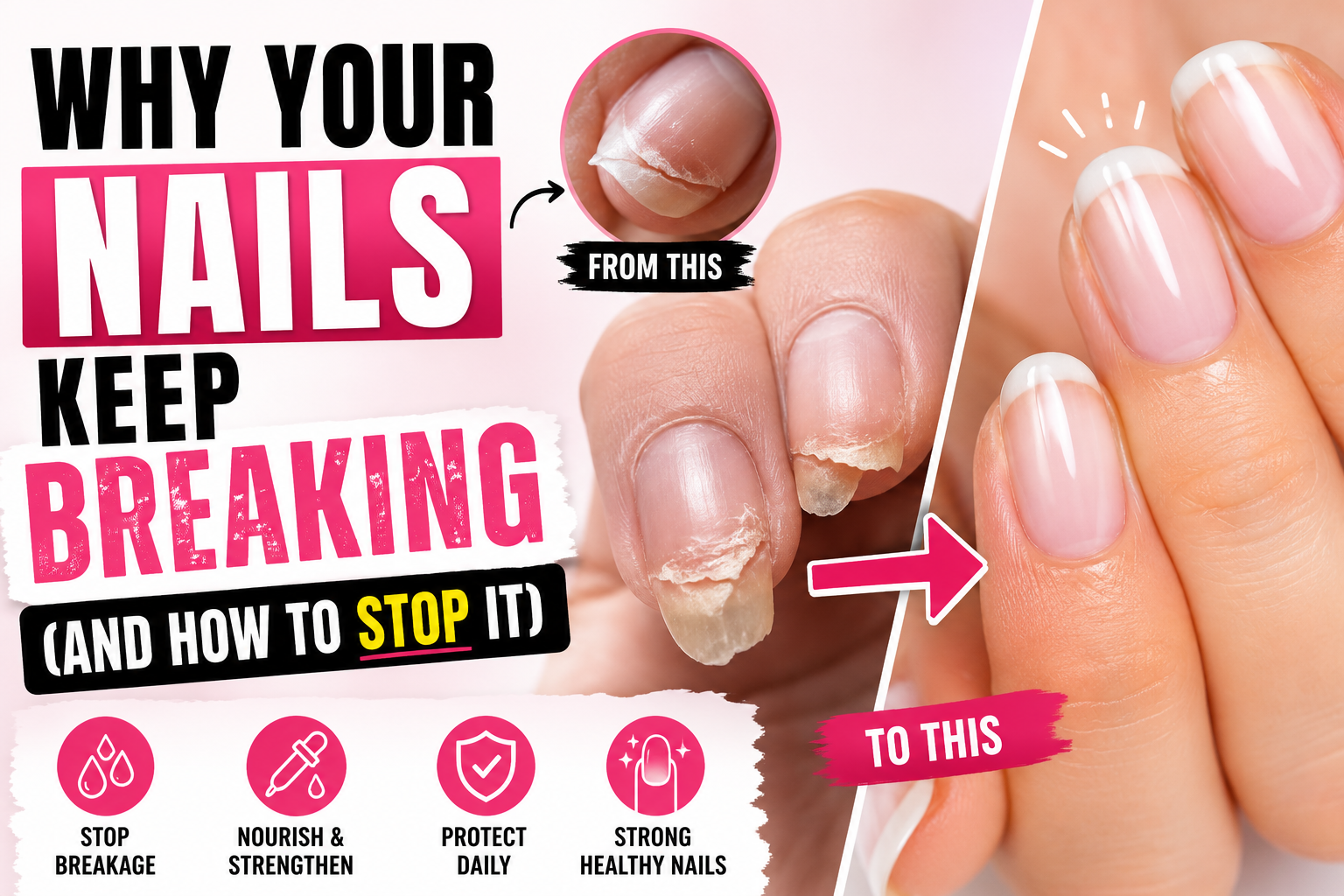
Few things are more frustrating than finally growing your nails to the perfect length only to have one snap, split, or peel. If this sounds familiar, you're not alone. Brittle, weak nails are a common problem that affects people of all ages. While it may seem like your nails simply refuse to grow, the truth is that they are often reacting to your daily habits, environment, or even your overall health.
The good news is that most nail breakage can be prevented. By understanding why your nails keep breaking and making a few simple changes, you can enjoy stronger, healthier nails that are less likely to chip or split.
Understanding Nail Structure
Your nails are made primarily of a protein called keratin. This is the same protein found in your hair and the outer layer of your skin. Healthy nails are smooth, flexible, and strong enough to resist everyday wear and tear.
Although nails appear hard, they actually contain small amounts of moisture and natural oils. When these are lost, nails become dry and brittle, making them much easier to break.
Fingernails typically grow about 3 millimeters each month, so repairing damaged nails takes patience. Since you cannot "heal" the damaged part of the nail, your goal is to protect new, healthy growth.
Common Reasons Your Nails Keep Breaking
1. Frequent Exposure to Water
One of the biggest causes of weak nails is repeated soaking in water. Every time your nails become wet, they absorb moisture. As they dry, that moisture leaves again, causing the nail layers to expand and contract. Over time, this weakens the nail and makes it prone to splitting.
People who wash dishes frequently, clean without gloves, or wash their hands dozens of times each day often experience this problem.
How to prevent it:
- Wear rubber gloves while cleaning.
- Dry your hands thoroughly after washing.
- Apply hand cream after every wash.
2. Dry Nails
Just as dry skin cracks, dry nails break easily. Cold weather, air conditioning, harsh soaps, and alcohol-based hand sanitizers can all strip away natural moisture.
Solution
Use a moisturizing hand cream several times a day. Choose products containing ingredients like:
- Shea butter
- Glycerin
- Jojoba oil
- Vitamin E
- Coconut oil
Massage the moisturizer into your nails and cuticles before bed for the best results.
3. Nutritional Deficiencies
Your nails rely on nutrients from your diet to grow properly. If your body lacks important vitamins and minerals, your nails may become thin, soft, or brittle.
Key nutrients include:
- Protein
- Iron
- Zinc
- Biotin
- Vitamin B12
- Vitamin D
- Omega-3 fatty acids
A balanced diet with lean protein, vegetables, fruits, nuts, seeds, eggs, and fish supports healthy nail growth.
4. Using Your Nails as Tools
Many people unknowingly damage their nails by using them to open cans, scrape labels, remove stickers, or pry open packages.
These habits place tremendous stress on the nail plate, causing tiny cracks that eventually become full breaks.
Instead, use scissors, keys, or proper tools whenever possible.
5. Overusing Nail Polish Remover
Acetone-based removers are excellent at dissolving nail polish, but they also remove natural oils from the nail surface.
Frequent use leaves nails dry and weak.
If possible:
- Limit polish removal to once a week.
- Choose an acetone-free remover for regular use.
- Moisturize immediately afterward.
6. Gel and Acrylic Damage
Gel manicures and acrylic nails can look beautiful, but repeated applications may weaken natural nails.
The biggest problem often occurs during removal. Peeling or scraping off gel polish removes layers of the natural nail along with it.
If you enjoy gel or acrylic nails:
- Visit a trained nail technician.
- Never peel them off.
- Give your natural nails regular breaks between applications.
7. Harsh Cleaning Products
Household cleaners contain chemicals that dry out both skin and nails.
Always wear protective gloves while:
- Washing dishes
- Cleaning bathrooms
- Using bleach
- Gardening
- Washing cars
This simple habit can significantly reduce nail damage.
8. Aging
As we get older, nails naturally become drier and more fragile. This is a normal part of aging, but proper nail care becomes even more important.
Regular moisturizing and gentle nail maintenance can greatly reduce age-related breakage.
When to See a Healthcare Professional
Most brittle nails improve with better care, but persistent nail problems can sometimes point to an underlying medical condition.
Consider seeing a healthcare professional if you notice:
- Sudden changes in nail color
- Severe thickening or thinning
- Pain or swelling around the nail
- Nails separating from the nail bed
- Deep ridges that appear suddenly
- Repeated breakage despite good nail care
A healthcare professional can determine whether issues such as nutrient deficiencies, thyroid problems, skin conditions, or fungal infections may be contributing.
Final Thoughts
Strong, beautiful nails don't happen by accident. They are the result of healthy habits, good nutrition, and proper protection from everyday damage. If your nails keep breaking, don't be discouraged. Small changes—like moisturizing regularly, wearing gloves during household chores, eating a balanced diet, and avoiding harsh treatments—can make a big difference over time.
Remember that nails grow slowly, so improvement won't happen overnight. With patience and a consistent routine, you'll give your nails the best chance to grow longer, stronger, and healthier. By caring for them from both the inside and the outside, you can reduce breakage and enjoy nails that look as good as they feel.

0 Comments
Leave a comment